Teach Your Kid to Ride a Bike in 3 Days
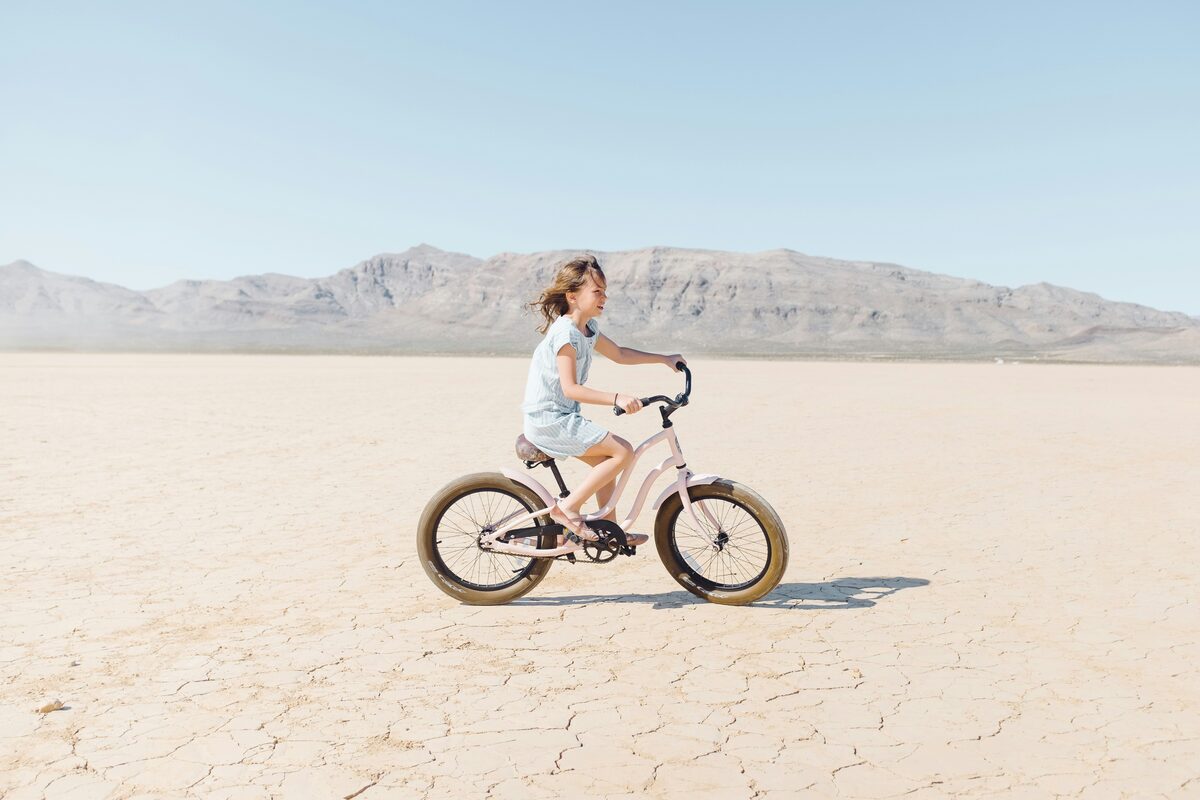
Teaching a kid to ride a bike sounds like a test of patience — weeks of wobbling, holding on, and consoling after falls. With the right approach, though, it can happen surprisingly fast. Many kids make the jump to riding freely in just two to three days. The secret is training the right skills at the right time.
Step 1: The balance bike — balance first
The most important skill in cycling is balance. No engine, no training wheels can do it for you — it’s a purely physical ability the child has to develop themselves.
A balance bike is the perfect tool for this. Without pedals, the child can focus entirely on balancing, pushing off with their feet and intuitively learning to shift their weight. Kids can start on a balance bike as young as two. Those who grow up with one often transition to a regular bike without a single fall.
Step 2: The trike — learning to pedal
Pedaling is the second core skill. A trike teaches exactly that: the child practices the pedaling motion, builds leg strength, and develops muscle memory for pushing the pedals — without having to balance at the same time.
Together, the balance bike and the trike cover both of the fundamental skills a child needs for cycling, each in isolation so they can be truly mastered.
Step 3: Getting on the real bike — hold, run, let go
Once your child has the right bike, the actual riding practice is shorter than you’d expect. Start by holding the bike steady while they get on and find their footing. Then run alongside them, holding the back of the seat to keep things stable. Let them pedal and steer — your job is just to stop the bike from falling, not to guide it.
As they gain confidence, start letting go briefly. A second or two at first, then longer. They often won’t notice right away, which is the point: they’re already balancing on their own. Gradually increase the time you’re not holding until they’re riding freely.
Most kids need just a few sessions of this before they take off on their own. The balance bike and trike did the hard work — this last step is just about putting it all together.
Training wheels: skip them entirely
Training wheels sound like a logical aid, but in practice they get in the way of the very learning that matters.
With training wheels, a child never has to balance and never learns to pedal properly — they just lean to the side. The bike effectively becomes a four-wheeler. Balance is never practiced. When the training wheels finally come off, it often feels like starting from scratch — frustrating and slow. The jump from “with training wheels” to “without” can take weeks, sometimes months.
With the balance bike and trike approach, there is no such jump. The transition to a real bike is a short, almost natural step.
Buying three separate things sounds expensive
It does — until you realize you don’t have to buy any of it new. Balance bikes and trikes show up constantly on eBay, Kleinanzeigen, or Nebenan, usually in good condition and at a fraction of the new price. Kids outgrow them quickly, so sellers are often just happy to have kids giving them a new life and love.
For the trike in particular, you may not need to own one at all. Many kindergartens have trikes as part of their regular equipment — your child might already be getting that pedaling practice there. And if not, chances are someone in your family or circle of friends has one gathering dust. It’s worth asking before buying.
Finding the right bike
When the time comes, it pays to pick a bike that’s lightweight and the right size. Heavy bikes make learning unnecessarily hard. The Kinderfahrradfinder (kids’ bike finder) helps you find good, lightweight bikes sized correctly for your child.
We have a Slack chat for fathers*. Feel free to join.
Join our Slack